
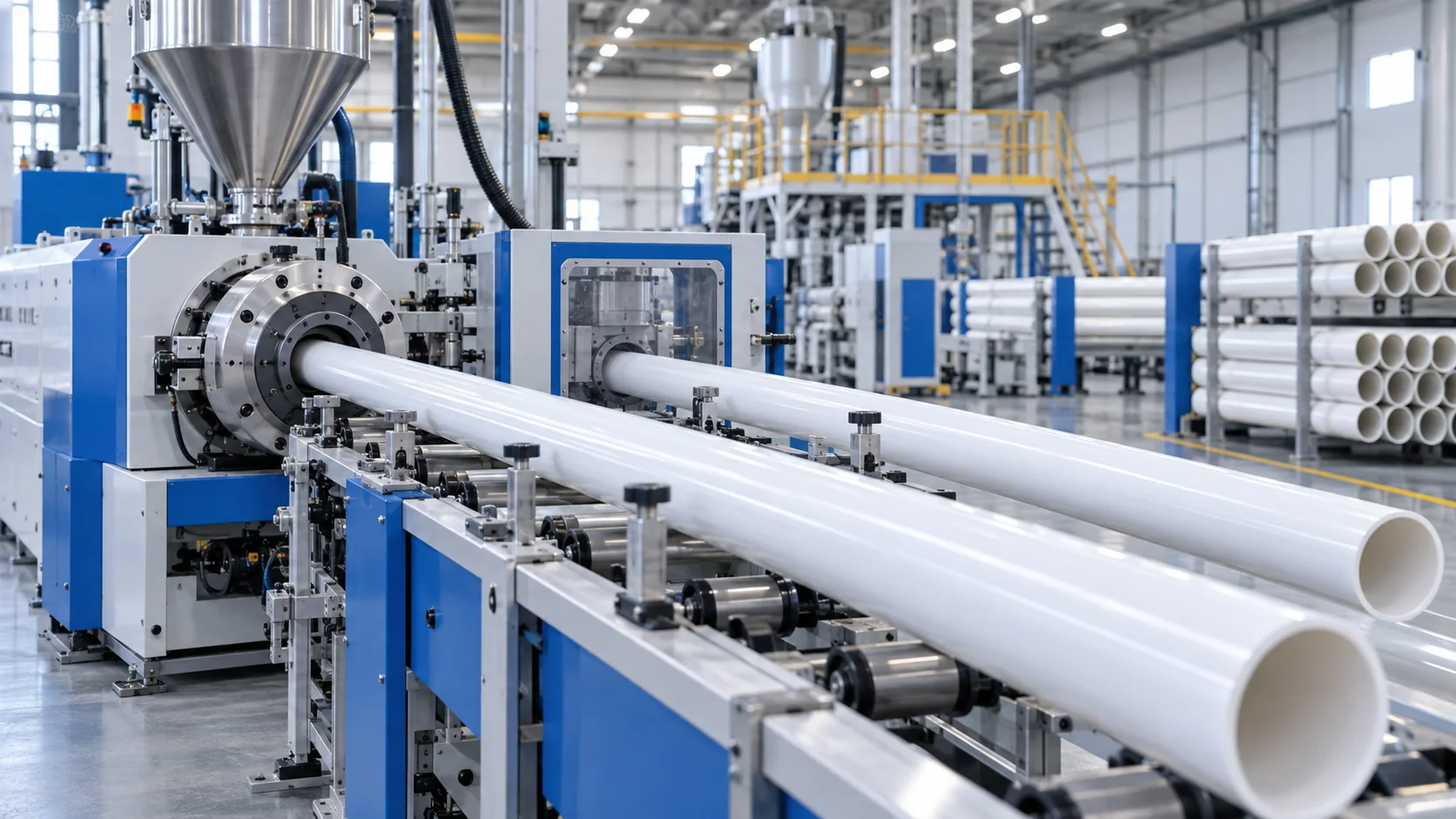
Reliable PVC pipe production depends on a steady flow through forming, sizing, cooling, cutting, and finishing. As output requirements grow, manual steps and inconsistent settings can slow the line and create avoidable variation.
Well-matched PVC Pipe Manufacturing Machinery helps manufacturers coordinate these operations, repeat key settings, and monitor output. The result is a more predictable production process, with quality checks built into the work rather than left until the end.
What Is PVC Pipe Manufacturing Machinery?
PVC Pipe Manufacturing Machinery includes the equipment used to form, size, pull, cut, and finish pipes. Depending on the line, this may include extrusion and calibration equipment as well as downstream belling or socketing machines.
A production line can be assembled from individual machines or integrated around the pipe specification and planned output. Matching the line to pipe diameters, wall thicknesses, materials, and end-forming needs helps avoid bottlenecks between stages.
A knowledgeable PVC pipe machine manufacturer can help assess these requirements before equipment is selected.
How PVC Pipe Manufacturing Machinery Improves Efficiency
1. Supports a Steadier Production Rate
Automated and synchronized equipment can keep material moving through repeated production steps with fewer manual pauses. When extrusion output, haul-off speed, cooling, and cutting are coordinated, operators can maintain a more consistent flow and respond sooner when the line needs adjustment.
2. Helps Maintain Repeatable Quality
Controlled machine settings make it easier to repeat dimensions and finishing requirements across production batches. Regular checks of pipe diameter, wall thickness, length, and appearance help catch variation early and reduce the chance that nonconforming pipes continue through the line.
3. Reduces Repetitive Manual Handling
Automation can take over recurring tasks such as pulling, cutting, or pipe-end forming. Operators can then focus more time on supervision, setup, and quality checks. The level of automation should fit the actual production plan and the skills available at the facility.
Why Belling and Socketing Machines Matter
Many PVC pipes need a formed end so that they can connect with compatible pipes or fittings. A belling or socketing machine heats and forms the pipe end using tooling designed for the required dimensions.
Heating time, temperature, forming pressure, tooling, and cooling all affect the finished socket. A dedicated PVC Pipe Belling Machine or PVC Pipe Socketing Machine can make this finishing stage more repeatable and easier to integrate into production.
Reduce Material Waste and Rework
Errors in cutting, sizing, or end forming can lead to rejected pipes or extra finishing work. Stable machine settings and timely inspection help identify process drift sooner, so operators can correct it before more material is affected.
Good material use also depends on coordinating the production stages. A change in extrusion rate, for example, may require a corresponding adjustment to the haul-off and downstream equipment.
Improve Production Control
Efficiency includes predictable output and visibility into how the line is performing, not only higher speed. Monitoring operating conditions and checking finished dimensions gives production teams useful information when they need to identify a source of variation.
Preventive maintenance for dies, calibration components, cutters, heaters, and moving parts supports reliable operation and helps reduce unexpected stoppages.
Choosing the Right Machinery for Your Production
Before investing in PVC Pipe Manufacturing Machinery, review the pipe sizes and specifications, expected production volume, automation needs, available space, end-forming requirements, maintenance support, and plans for future expansion.
These details help determine whether a standalone machine or a coordinated production line is the better fit. Equipment should be selected around the manufacturer's real process and product requirements.
Build a More Efficient PVC Pipe Production Setup
Reliable machinery can help PVC pipe manufacturers coordinate production stages, repeat important settings, and manage quality checks more consistently. The best setup is one that fits the material, pipe specifications, and output target of the facility.
For end-forming requirements, explore our PVC Pipe Belling Machine and PVC Pipe Socketing Machine. Contact Neelkanth Microtech to discuss your production requirements.
FAQs
1. What is PVC Pipe Manufacturing Machinery?
It is equipment used to produce and process PVC pipes, including forming, sizing, cutting, and pipe-end finishing machinery.
2. How does PVC pipe machinery support production efficiency?
It can help coordinate repeated operations, reduce manual handling, maintain consistent settings, and make production checks easier to manage.
3. What types of machinery are used in PVC pipe production?
Depending on the production line, manufacturers may use extrusion, sizing, cooling, haul-off, cutting, belling, and socketing equipment.
4. Why are belling and socketing machines important?
They form pipe ends to the required shape and dimensions so pipes can connect with compatible products. Controlled heating, tooling, and cooling help maintain repeatability.
5. How should a manufacturer choose machinery?
Consider pipe specifications, required output, automation level, factory space, finishing needs, maintenance requirements, and future production plans.