
Introduction
PVC pipes are widely used in water supply, plumbing, drainage, irrigation, and industrial piping systems. Their lightweight structure, durability, corrosion resistance, and easy installation make them suitable for many residential and commercial applications. However, the quality of a piping system depends not only on the pipe material but also on how individual pipe sections are connected.
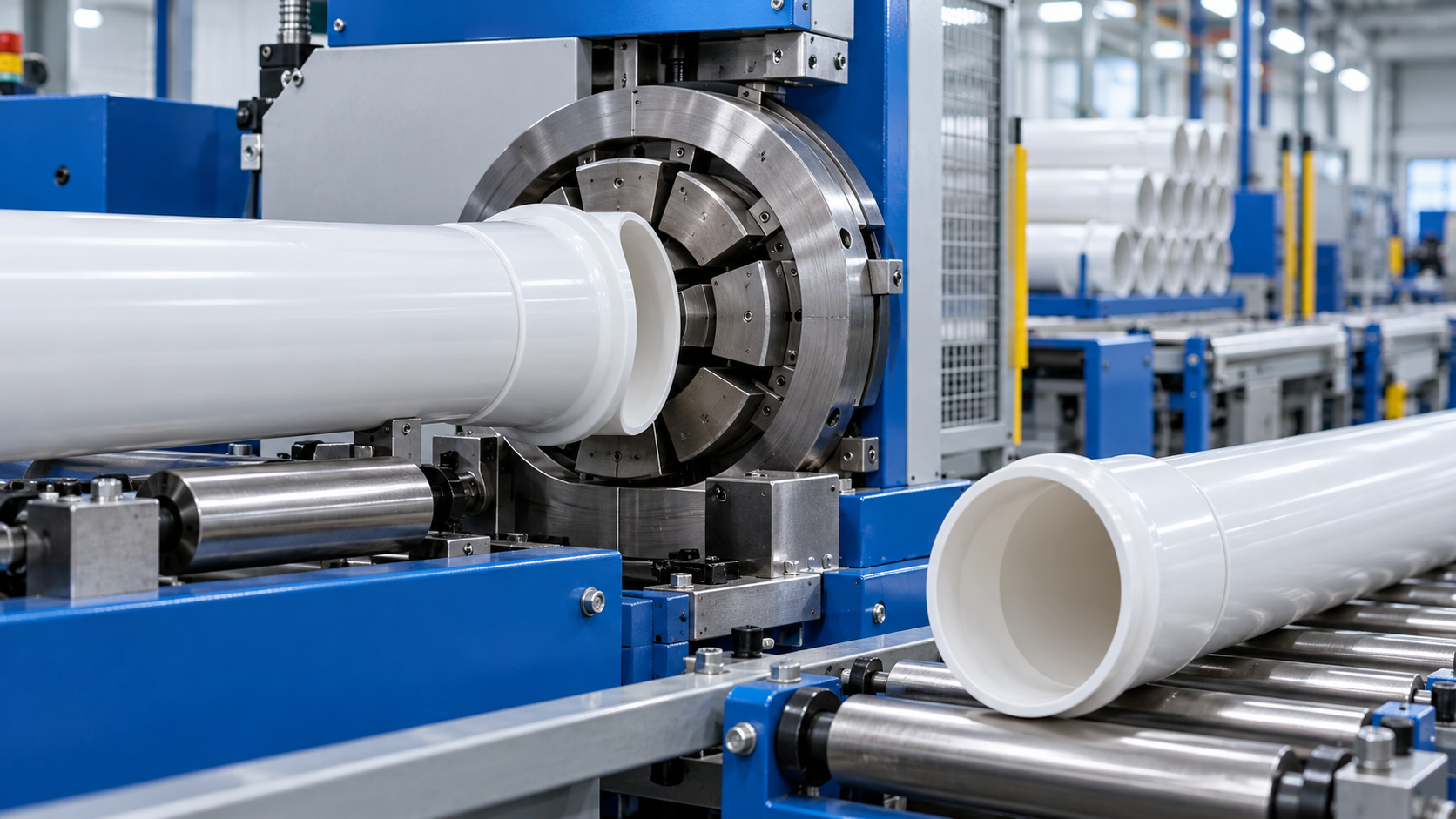
The PVC Pipe Socketing Process is an important manufacturing operation that creates a shaped end for connecting one pipe to another. A properly formed socket helps achieve suitable pipe fitting, consistent joint dimensions, and easier installation. Manufacturers must control heating, forming, and cooling to produce sockets that meet the required specifications.
Understanding different forming methods, production steps, benefits, and applications can help manufacturers improve product quality and maintain consistent manufacturing standards.
What Is the PVC Pipe Socketing Process?
The PVC Pipe Socketing Process involves forming one end of a PVC pipe into an enlarged, socket-shaped section. This allows another compatible pipe end to fit inside it and create a connection. Depending on the piping system, the joint may use a rubber sealing ring, adhesive, or another specified joining method.
During manufacturing, the end of the pipe is heated under controlled conditions until the material becomes suitable for forming. It is then shaped using appropriate tooling and cooled to help maintain the required dimensions.
Temperature, heating time, tooling alignment, forming pressure, and cooling conditions can affect the final result. Consistent process control is therefore important for producing uniform sockets across different pipe sizes and production batches.
Different PVC Pipe Socketing Methods
Manufacturers can select different forming techniques according to pipe diameter, wall thickness, material characteristics, required socket design, and production volume.
1. Heat-Based Forming
Heat-based forming softens the pipe end so it can be shaped into the required profile. The pipe is heated evenly and positioned in suitable forming tooling. Once the desired shape is achieved, the formed section is cooled under controlled conditions.
This method requires careful temperature management. Excessive heating may damage or deform the material, while insufficient heating can result in incomplete forming. Maintaining suitable processing conditions helps improve consistency and reduce manufacturing defects.
2. Mandrel-Based Forming
Mandrel-based forming uses a shaped internal tool to help create the required socket dimensions. After the pipe end is softened, it is formed around the mandrel to produce the intended internal profile.
Correct tooling selection and alignment are important for achieving dimensional accuracy. Manufacturers should also inspect the forming tools regularly to identify wear or surface damage that could affect the finished pipe.
3. Forming for Sealing-Ring Joints
Some piping systems require sockets designed to accommodate rubber sealing rings. In these applications, the socket must have the correct profile and dimensions to support proper sealing-ring placement and joint assembly.
The forming operation should follow the applicable pipe specifications. Incorrect groove dimensions or an irregular socket profile may make assembly difficult or affect joint performance. Inspection helps verify that the finished socket meets the requirements of the intended piping system.
Step-by-Step PVC Pipe Socket Formation
The PVC Pipe Socket Formation operation generally includes preparation, heating, shaping, cooling, and inspection. Exact procedures depend on the equipment and product specifications.
Step 1: Pipe Preparation
Before forming begins, manufacturers should check the pipe diameter, wall thickness, length, and surface condition. The pipe end should be properly prepared and free from damage or contamination that could affect the final shape.
Step 2: Controlled Heating
The selected pipe-end section is heated until it reaches the required forming condition. Heating time and temperature depend on the pipe dimensions, material formulation, and production requirements.
Uniform heating helps the pipe end soften consistently around its circumference. Uneven heating may lead to an irregular profile or dimensional variation.
Step 3: Shaping the Socket
Once the material is ready, the pipe end is positioned in suitable tooling. The tooling shapes the softened section according to the specified dimensions and design.
Correct positioning and alignment help maintain roundness and concentricity. Operators should follow approved production settings to achieve consistent results.
Step 4: Cooling and Stabilisation
After shaping, the socket is cooled under controlled conditions. This allows the material to stabilise and retain the required profile.
Uneven cooling or handling the pipe before sufficient stabilisation may cause deformation or dimensional changes. A consistent cooling procedure helps improve product quality.
Step 5: Final Inspection
The finished pipe should be checked for socket diameter, depth, roundness, surface quality, and other design-specific measurements. Depending on the application, additional joint-fit or performance tests may be required.
Manufacturers should record inspection results and identify defective products before packaging or dispatch.
Benefits of the PVC Pipe Socketing Process
A properly controlled operation provides several advantages for manufacturers and end users.
1. Easier Pipe Installation
A correctly shaped socket allows compatible pipe sections to fit together according to the intended joint design. This can simplify installation and reduce fitting difficulties.
2. Consistent Joint Dimensions
Uniform socket dimensions improve compatibility between pipe sections and specified joining components. This is particularly important for manufacturers producing pipes in high volumes.
3. Better Production Consistency
Following standard heating, forming, and cooling procedures helps reduce variation between products. Consistent manufacturing practices also make it easier to identify and correct recurring quality issues.
4. Support for Reliable Connections
The socket is an important part of a pipe connection. Accurate dimensions and suitable joint assembly support reliable performance when the complete piping system is designed, installed, and tested according to its requirements.
5. Reduced Waste and Rework
Monitoring production settings and inspecting finished pipes can help identify defects early. This reduces unnecessary material waste, rework, and delays during manufacturing.
Understanding the PVC Pipe Socket Joint
A PVC Pipe Socket Joint connects two compatible pipe sections by inserting one pipe end into the socket of another. The exact connection method depends on the pipe design and application.
Some systems use rubber sealing rings to create a seal, while others use an approved adhesive or another specified joining technique. Each method has different installation requirements, and manufacturers and installers should follow the relevant product instructions.
A properly manufactured PVC Pipe Socket Joint requires accurate socket dimensions, compatible pipe sizes, and suitable assembly practices. If the socket is too small, too large, or irregularly shaped, pipe assembly may become difficult.
Quality checks should confirm the required socket depth, internal dimensions, and sealing features where applicable. The finished connection must also meet the performance requirements for its intended use.
Applications of PVC Pipe Socketing
The PVC Pipe Socketing Process is used in manufacturing pipes for several industries.
- Water Supply: Compatible socketed pipes are used in suitable water distribution systems that meet the required pressure and performance specifications.
- Drainage and Sewerage: Socket connections join pipe sections in drainage installations, depending on the pipe type and sealing arrangement.
- Agricultural Irrigation: Socketed pipes support the assembly of irrigation networks used for agricultural water distribution.
- Residential and Commercial Plumbing: These pipes are used in suitable plumbing and drainage systems in buildings.
- Industrial Piping: PVC piping systems can be used to transport compatible fluids where the material and joint design meet operating requirements.
Selecting the correct pipe specification and joint design is essential for achieving suitable performance in each application.
Common Socketing Problems and Quality Control
Manufacturers may experience issues such as uneven socket dimensions, deformation, surface marks, incorrect socket depth, and poor joint fit. These problems can arise from inconsistent heating, incorrect tooling alignment, unsuitable forming conditions, or inadequate cooling.
To maintain quality, manufacturers should regularly inspect tooling, monitor critical process settings, and follow standard operating procedures. Operators should also be trained to identify visible defects and report variations during production.
The PVC Pipe Socket Formation quality checks should include relevant measurements and visual inspection. Where required, joint-fit and performance testing should follow applicable standards and product specifications.
Routine maintenance and production records can help identify recurring issues. Reviewing this information enables manufacturers to make informed process improvements and maintain consistent output.
How Neelkanth Microtech Supports Pipe Manufacturing
Neelkanth Microtech works in the plastic pipe machinery and engineering sector, supporting manufacturers looking for suitable machinery for their production requirements. Choosing appropriate equipment involves considering pipe dimensions, production capacity, forming requirements, and the desired level of process consistency.
Manufacturers should evaluate equipment specifications, tooling compatibility, operating requirements, and maintenance needs before making a purchase decision. The selected setup should match the intended pipe design and applicable production standards.
For businesses planning to improve their pipe-end forming operations, discussing product requirements and production needs with an experienced machinery supplier can help them assess suitable equipment options.
Conclusion
The PVC Pipe Socketing Process plays an important role in manufacturing pipes that connect correctly and meet their intended application requirements. From pipe preparation and controlled heating to forming, cooling, and final inspection, every stage contributes to socket accuracy and consistency.
By selecting appropriate forming methods, maintaining process controls, and following relevant specifications, manufacturers can reduce defects and improve production quality. Consistent socket dimensions and correct joint assembly help support easier installation and reliable piping system performance.
Frequently Asked Questions
1. What is the PVC Pipe Socketing Process?
The PVC Pipe Socketing Process involves shaping one end of a PVC pipe into a socket so another compatible pipe can fit inside it. This helps create a connection according to the pipe system's joint design.
2. What are the common PVC Pipe Socketing Methods?
Common PVC Pipe Socketing Methods include heat-based forming, mandrel-based forming, and forming techniques designed for sealing-ring joints. The appropriate method depends on pipe dimensions, socket design, material properties, and production requirements.
3. What is PVC Pipe Socket Formation?
PVC Pipe Socket Formation is the process of heating and shaping the end of a PVC pipe to achieve the required socket profile. Controlled heating, accurate forming, and proper cooling help maintain dimensional consistency.
4. What is a PVC Pipe Socket Joint?
A PVC Pipe Socket Joint connects two compatible pipe sections by inserting one pipe end into the socket of another. Depending on the piping system, the joint may use a rubber sealing ring, adhesive, or another specified joining method.
5. Why is the PVC Pipe Socketing Process important?
The PVC Pipe Socketing Process helps produce consistent socket dimensions, supports easier pipe assembly, and reduces fitting difficulties. Proper manufacturing and inspection also help improve the quality of pipe connections.
6. What factors affect PVC pipe socket quality?
Socket quality depends on heating temperature, heating time, tooling alignment, forming conditions, cooling, and material consistency. Regular inspection helps identify dimensional variations and manufacturing defects.
7. How can manufacturers improve PVC Pipe Socket Formation?
Manufacturers can improve PVC Pipe Socket Formation by maintaining consistent heating conditions, using correctly aligned tooling, controlling cooling, and checking socket dimensions at defined intervals.
8. Where are socketed PVC pipes commonly used?
Socketed PVC pipes are used in suitable water supply, drainage, sewerage, irrigation, plumbing, and industrial piping systems. The pipe material and joint design must meet the requirements of the intended application.
9. How does a PVC Pipe Socketing Machine help in manufacturing?
A PVC Pipe Socketing Machine is used to form pipe ends into the required socket profile. Equipment selection should consider pipe size, production capacity, tooling requirements, and the desired level of dimensional consistency.
10. How can manufacturers check PVC Pipe Socket Joint quality?
Manufacturers can check a PVC Pipe Socket Joint by inspecting socket diameter, depth, roundness, surface condition, and compatibility with the intended joining components. Additional tests should follow applicable product specifications and industry standards.