
On this page
PVC (Polyvinyl Chloride) pipes are widely used in plumbing, drainage, irrigation, water supply, and industrial applications. They are lightweight, durable, corrosion-resistant, and suitable for many piping requirements. However, the performance of a piping system also depends on how effectively the pipes are connected.
Understanding the Types of PVC Pipe Joints helps engineers, contractors, plumbers, and manufacturers select suitable connections for different operating conditions. Each joint offers specific benefits related to sealing, installation, maintenance, and system performance.
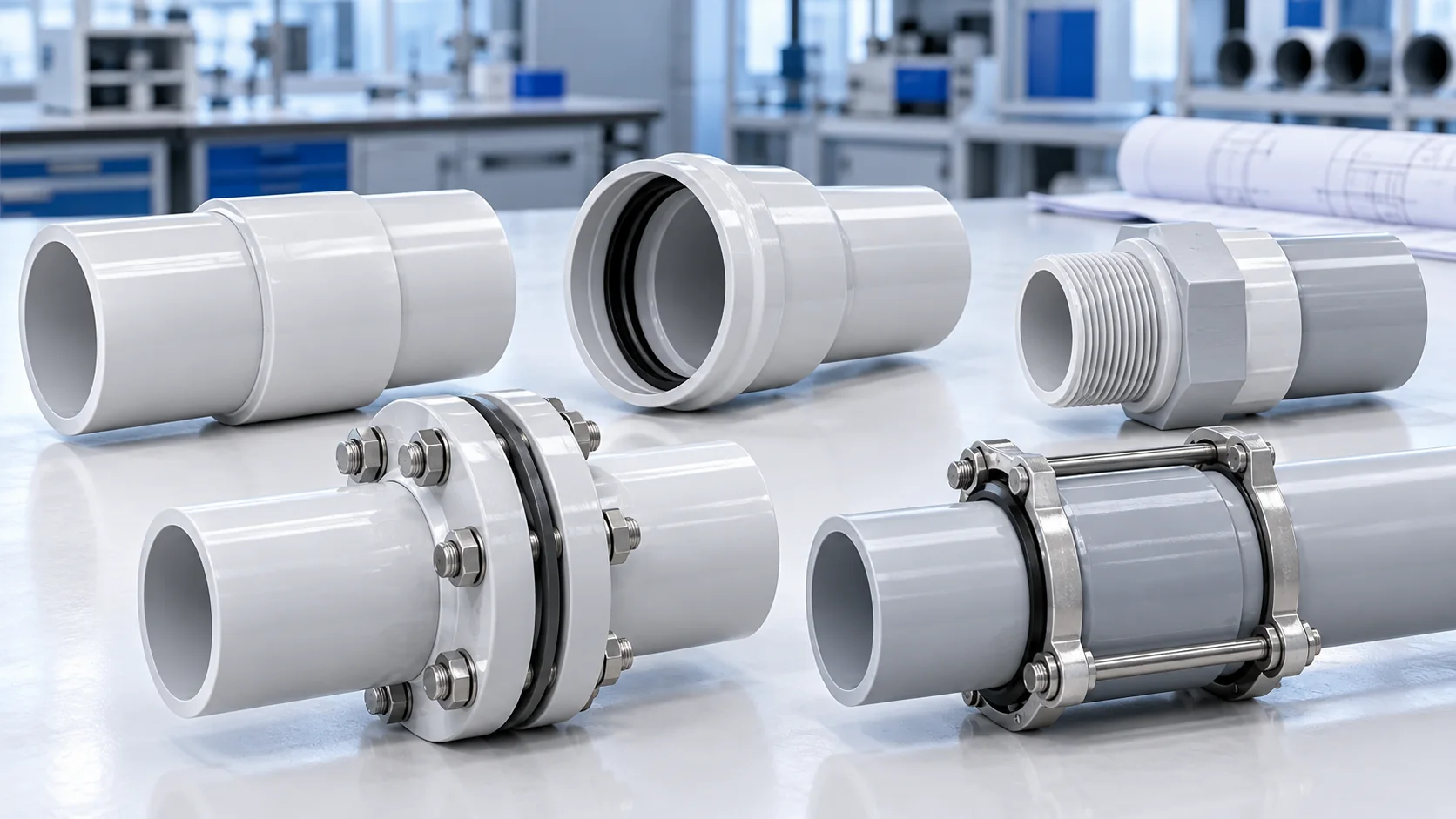
Common connections include solvent cement joints, rubber ring joints, threaded joints, flanged joints, and mechanical joints. The correct choice depends on pipe diameter, working pressure, fluid compatibility, installation environment, and maintenance requirements.
In this guide, Neelkanth Microtech explains the different joining techniques, their applications, advantages, and the important factors to consider when selecting a suitable PVC pipe connection.
What Are PVC Pipe Joints?
PVC pipe joints are connections used to join two pipes or connect a pipe to a fitting, valve, or other piping component. They create a continuous pipeline that can transport water and other compatible fluids.
The joining technique depends on the pipe specification, operating pressure, and intended application. Some connections are permanent, while others allow components to be disconnected for maintenance or replacement.
For example, solvent cement connections are commonly used in compatible plumbing systems, whereas rubber ring connections are widely used in drainage and underground piping. Threaded and flanged connections are useful when a detachable joint is required.
Selecting the correct connection can help reduce leakage risks, improve installation quality, and support long-term system reliability.
5 Common Types of PVC Pipe Joints
Understanding the Types of PVC Pipe Joints makes it easier to select a suitable connection for different applications. The five common options are explained below.
1. Solvent Cement Joint
A solvent cement joint creates a permanent connection between compatible PVC pipes and fittings. A suitable solvent cement softens the mating surfaces, allowing them to bond as the connection sets and develops strength.
How it works:
- Cut the pipe to the required length.
- Remove burrs and prepare the pipe end.
- Clean the pipe and fitting surfaces.
- Apply a compatible primer where required.
- Apply the recommended solvent cement and insert the pipe fully into the socket.
- Hold the connection as directed and allow the joint to cure according to the manufacturer's instructions.
Advantages:
- Creates a permanent connection.
- Provides a compact joint design.
- Is suitable for many compatible plumbing applications.
- Does not require bolts at the bonded connection.
Applications: Residential plumbing, compatible water supply systems, irrigation, and selected industrial piping.
The pipe material, fitting, cement, and installation procedure must be compatible with the intended application and operating pressure.
2. Rubber Ring Joint
A rubber ring joint, also known as an elastomeric seal joint, uses a rubber sealing ring to connect compatible pipes. The ring creates a seal when the pipe end is inserted into the socket.
Unlike solvent cement connections, this joint can accommodate limited movement when designed for that purpose.
How it works:
The sealing ring is positioned in the designated groove or socket. The pipe end is cleaned and aligned before insertion. An approved lubricant is used when specified by the manufacturer.
Advantages:
- Provides effective sealing when correctly installed.
- Can accommodate specified movement and deflection.
- Is suitable for many larger-diameter piping systems.
- Can simplify installation without solvent cement.
Applications: Underground drainage, sewerage networks, stormwater systems, and selected water distribution pipelines.
Correct ring positioning, insertion depth, alignment, and component compatibility are essential for reliable performance.
3. Threaded Joint
A threaded joint connects compatible pipes or fittings through matching male and female threads. It is useful when a removable connection is needed.
How it works:
The threaded components are checked for damage and compatibility. A suitable thread sealant is applied when specified, and the connection is tightened according to the manufacturer's instructions.
Advantages:
- Allows convenient assembly and disassembly.
- Can simplify maintenance and replacement.
- Does not require solvent cement for the threaded connection itself.
- Is useful for selected equipment and accessory connections.
Applications: Compatible fittings, selected low-pressure connections, equipment interfaces, and plumbing accessories.
PVC threads can crack if overtightened. Therefore, threaded connections should only be used where approved for the pipe material and intended operating conditions.
4. Flanged Joint
A flanged joint connects two piping components using flanges, a gasket, and suitable bolts. It is useful when components need to be disconnected for inspection, maintenance, or replacement.
How it works:
The flanges are aligned, and a compatible gasket is placed between their mating surfaces. The bolts are tightened evenly according to the manufacturer's recommended procedure.
Advantages:
- Makes dismantling and maintenance easier.
- Supports connections to compatible pumps, valves, and equipment.
- Allows components to be replaced without cutting the pipe.
- Can be suitable for larger piping installations.
Applications: Industrial piping, water treatment plants, compatible chemical handling systems, and pump connections.
Proper alignment, gasket selection, bolt tightening, and pressure-rating compatibility help prevent leaks and unnecessary stress on PVC components.
5. Mechanical Joint
Mechanical joints use specially designed fittings, compression components, clamps, or other fastening arrangements to connect compatible pipes.
Some mechanical connectors are designed for PVC-to-PVC connections, while others support transitions between compatible pipe materials.
How it works:
The pipe is prepared according to the fitting manufacturer's instructions. Seals, compression rings, and other components are positioned correctly before the connection is assembled and tightened.
Advantages:
- Can provide a removable connection.
- May simplify repairs and component replacement.
- Is available for different pipe sizes and configurations.
- Can support selected connections between compatible piping materials.
Applications: Repairs, maintenance points, equipment connections, and selected water distribution or industrial systems.
The connector must be suitable for the pipe dimensions, pressure rating, fluid, and operating conditions.
PVC Pipe Joint Types: Comparison Table
Different PVC Pipe Joint Types offer different advantages depending on the intended application.
Joint type | Main feature | Typical applications |
Solvent cement joint | Permanent bonded connection | Compatible plumbing and water piping |
Rubber ring joint | Sealed connection with designed flexibility | Drainage and underground pipelines |
Threaded joint | Removable threaded connection | Compatible fittings and accessories |
Flanged joint | Bolted, detachable connection | Pumps, valves, and industrial systems |
Mechanical joint | Connector-based assembly | Repairs and selected pipe connections |
No single connection is ideal for every application. The final selection should consider pipe specifications, pressure, fluid compatibility, installation conditions, and maintenance requirements.
What Are the Different PVC Pipe Joining Methods?
The term PVC Pipe Joining Methods refers to the techniques used to connect pipes and fittings securely. The most common techniques include solvent cementing, rubber ring sealing, threaded assembly, flange connections, and mechanical fastening.
The selection process should begin with the piping system's purpose. A permanent bonded connection may be appropriate for one plumbing application, while an underground drainage network may require a rubber ring connection that accommodates specified movement.
Pipe preparation is equally important. The pipe must have the correct dimensions, a suitable end finish, and proper alignment before joining. Incorrect preparation can affect the fit and reliability of the finished connection.
During manufacturing, socket formation is particularly important for pipes designed with bell-shaped ends. A correctly formed socket allows a compatible pipe or fitting to be inserted according to the specified joint design.
Neelkanth Microtech understands the importance of suitable machinery, controlled production processes, and consistent dimensions in plastic pipe manufacturing.
Manufacturers can explore a PVC Pipe Socketing Machine to understand the equipment used to form pipe sockets and support consistent production. Machine selection should consider the required pipe diameter, wall thickness, socket profile, and production capacity.
Understanding PVC Pipe Connection Types
Different PVC Pipe Connection Types serve different purposes. Permanent joints are useful when a fixed connection is required, while detachable joints support maintenance and equipment replacement.
For example, solvent cement joints are generally permanent, whereas threaded, flanged, and certain mechanical joints can be dismantled when designed for that purpose. Rubber ring connections are useful where an appropriate sealed socket connection is required.
The connection must also match the pipe's material, dimensions, pressure rating, and operating environment. Using incompatible fittings or an unsuitable joining technique can result in leakage, cracking, or premature failure.
Manufacturers should also consider the dimensional accuracy of the pipe ends and sockets. Consistent dimensions support correct assembly and improve compatibility between pipes and fittings.
How to Choose the Right PVC Pipe Joint
Choosing among different PVC Pipe Joint Types requires evaluating the technical requirements of the piping system.
1. Operating pressure: Ensure the joint and all connected components meet the system's design pressure.
2. Pipe diameter: Check that the fitting matches the pipe's outside diameter, wall thickness, and dimensional standard.
3. Fluid compatibility: Confirm that the pipe, seals, cement, and gaskets are suitable for the fluid being transported.
4. Installation environment: Underground pipelines, exposed piping, industrial facilities, and indoor plumbing may have different requirements.
5. Maintenance needs: Select an approved detachable connection when regular inspection or component replacement is expected.
6. Movement and alignment: Consider thermal expansion, vibration, settlement, and deflection. Use joints designed to accommodate the expected movement.
7. Applicable standards: Follow relevant piping standards, manufacturer instructions, curing requirements, and installation procedures.
A careful selection process helps reduce leakage risks, improve reliability, and minimise unnecessary maintenance costs.
Common Mistakes to Avoid When Joining PVC Pipes
Even a suitable joint can fail when installation practices are incorrect. Common mistakes include using incompatible fittings, skipping surface preparation, applying unsuitable solvent cement, inserting the pipe incorrectly, overtightening threaded connections, and using damaged sealing rings.
Manufacturing problems can also affect joint quality. Inconsistent socket dimensions, incorrect forming conditions, and inadequate inspection may cause poor fit between compatible components.
To prevent these issues, follow the manufacturer's instructions, use compatible joining materials, inspect finished connections, and conduct the required pressure or leakage tests before putting the system into service.
Correct installation and regular inspection help maintain piping system reliability.
Conclusion
Understanding the Types of PVC Pipe Joints helps engineers, manufacturers, contractors, and plumbers choose suitable connections for plumbing, drainage, water supply, and industrial applications. Solvent cement, rubber ring, threaded, flanged, and mechanical joints each offer specific benefits and limitations.
The best connection depends on pipe specifications, operating conditions, installation requirements, and maintenance needs. Proper preparation, compatible components, and correct installation procedures are equally important for achieving reliable results.
Neelkanth Microtech supports the plastic pipe manufacturing industry with machinery solutions designed around manufacturers' production requirements. Businesses evaluating pipe manufacturing equipment should consider dimensional consistency, production capacity, process control, and product quality to achieve dependable manufacturing outcomes.
Frequently Asked Questions
1. What are the main types of PVC pipe joints?
The main options include solvent cement joints, rubber ring joints, threaded joints, flanged joints, and mechanical joints. The right choice depends on the application, pressure, pipe size, and maintenance requirements.
2. Which PVC pipe joint is best for water supply?
Solvent cement joints and approved rubber ring joints are commonly used in suitable water supply systems. The right option depends on pipe specifications, system design, pressure rating, and applicable standards.
3. What are the most common Types of Pipe Joints s?
Common techniques include solvent cementing, rubber ring sealing, threaded connections, flange assembly, and mechanical connections. Each method serves different installation and operating requirements.
4. Can PVC pipe joints be dismantled?
Threaded, flanged, and certain mechanical connections can be dismantled when designed for that purpose. Solvent cement joints are generally permanent and usually require cutting out the connected section for replacement.
5. Why is socket quality important in PVC pipe manufacturing?
Socket quality affects dimensional consistency and the fit between compatible pipes or fittings. Proper socket formation, process control, and inspection help support reliable joint assembly.
6. How can manufacturers improve pipe connection quality?
Manufacturers can focus on accurate dimensions, suitable tooling, controlled processing conditions, compatible materials, and regular product inspection. These practices help achieve consistent products and reliable connections.